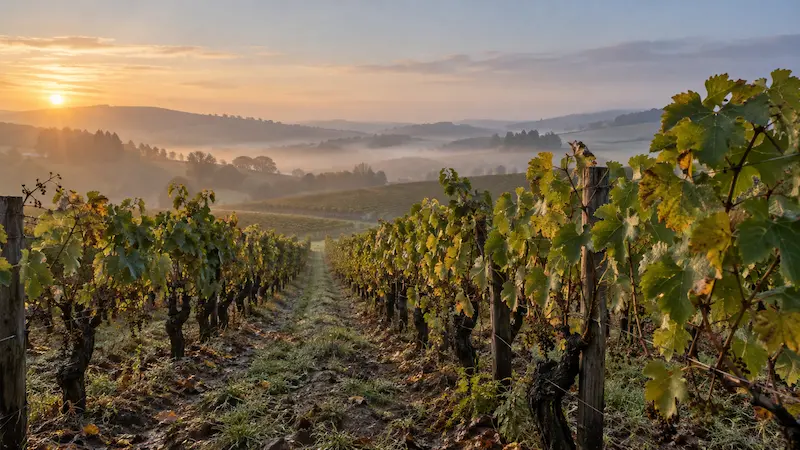
Between harvest and leaf fall, the grapevine does not rest. It moves its photo-assimilates into its permanent organs: roots, trunk and wood. There it stores them as starch.
Applying a post-harvest biostimulant to grapevines pursues two goals. First, keep the canopy photosynthetically active while those reserves rebuild. Second, restart soil biological activity while temperatures still allow it.
These reserves matter. The vine draws on them at the next budbreak, when it builds a canopy before it can feed itself. In other words, the potential of the 2027 season is decided in the coming weeks.
This year, the window deserves particular attention. The 2026 European summer delivered one heatwave after another. Water stress reached even northern vineyards. Harvest therefore ran well ahead of the usual calendar.
That early start lengthens the post-harvest window. It also applies to vines that dug deeper into their resources than usual. Here is what really happens during this period, and how to prioritise block by block.
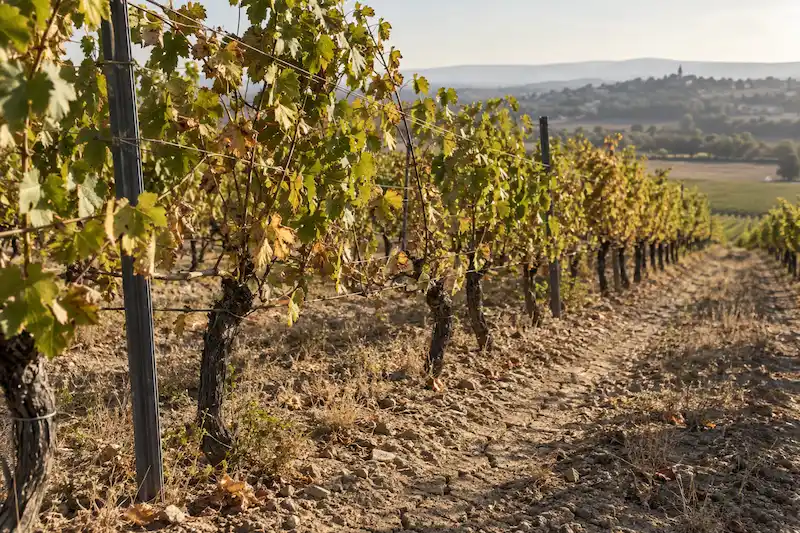
What condition do vineyards come out of the 2026 harvest in?
A record-early season
The 2026 season will stand as one of the earliest on record in France. By mid-July, Sencrop reported nearly a week’s advance in Burgundy over the 2020 vintage. Until then, 2020 held the record at the Hospices de Beaune.
The Comité Champagne announced about twelve days’ advance on the ten-year average. In the Pyrénées-Orientales, flowering ran 13 days ahead of the twenty-year average.
Water stress across unexpected terroirs
The water constraint surprised growers by how far north it spread. It hit terroirs that rarely expect it: the free-draining soils of the Marne and the Côte des Bars, the gravel soils of the Graves.
Three symptoms dominated. Berries stayed small. Ripening sometimes stalled. Above all, leaves yellowed and dropped early on the worst-affected blocks.
Yet the canopy remains the vine’s working tool after harvest. Canopy condition therefore becomes the first thing to assess. A block that kept a functional leaf area still has an engine. A block defoliated in August faces a capacity problem instead.
Soil condition compounds this. Researchers describe the 2026 drought as a serious warning for European soils. Several dry weeks bring soil biological activity to a standstill. Mineralisation only restarts when the rain returns.
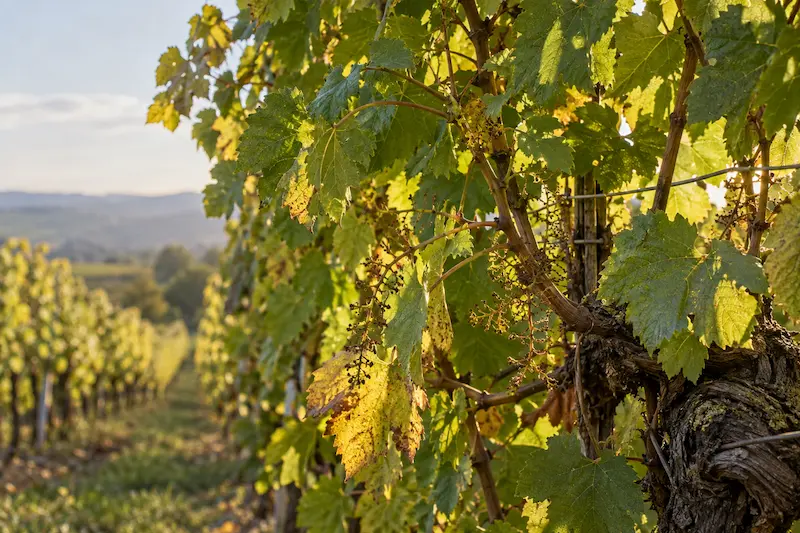
What actually happens between harvest and leaf fall
Research documents the mechanism well. According to the French Vine and Wine Institute (IFV), the vine stores its carbohydrates as starch in its woody tissues. From flowering onwards, that starch first fills the roots and permanent structures. It reaches the canes later, right up to leaf fall.
This build-up matters because the vine spends it afterwards. It draws heavily on root and trunk starch from budbreak to flowering. During that phase the canopy is not yet self-sufficient, and young roots absorb little. The vine therefore lives on what it banked the previous autumn.
One often-overlooked point deserves attention. Clusters stop attracting sugars once berry loading reaches its plateau. Depending on the variety, that happens 10 to 60 days before harvest. Redirection towards storage organs therefore begins before picking. The post-harvest period is no bonus round: it completes a process already under way.
Finally, the IFV reports a measured effect from keeping the canopy alive. Maintaining active photosynthesis for 10 to 15 days after harvest supports carbohydrate restoration. That is the window a post-harvest programme can influence. A growing number of growers now build a foliar application into it, as Vitisphere reports.
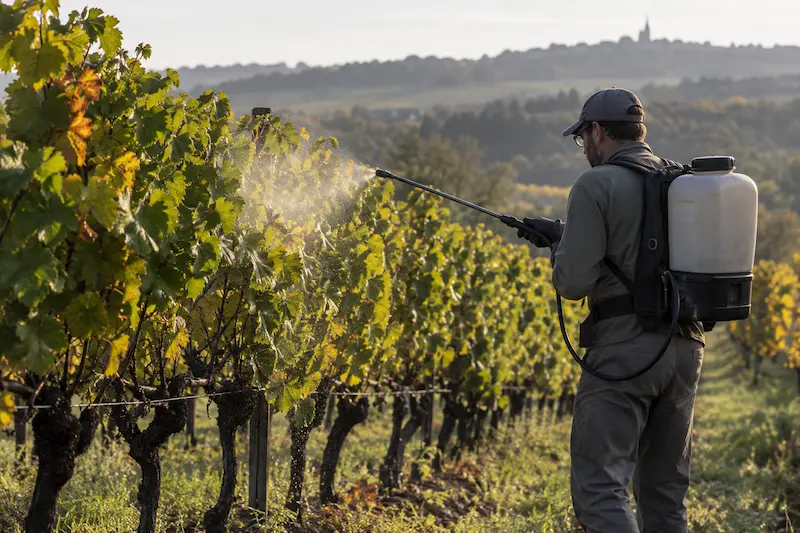
The foliar lever: extend canopy activity without forcing it
The first lever keeps a functional canopy going as long as possible. A biostimulant applied to the leaves does not feed the plant. It acts on the vine’s physiological processes. Several families of active compounds work at this stage.
Amino acids support growth, photosynthesis and the stress response. Polysaccharides contribute to abiotic stress tolerance. Phenolic compounds provide antioxidant protection, useful after a season of stacked constraints. Phytohormones act on both shoot and root growth.
One limit applies, however: a canopy that has already dropped cannot be recovered. Where August defoliation ran deep, the foliar lever loses most of its value. The effort shifts to the soil and to the next cycle.
Conversely, blocks that kept their canopy stand to gain. The reasoning holds under conventional and organic management alike — solutions approved for use in organic farming cover this type of application. On cereals, the same logic of an early, well-timed application drives our guide to securing autumn emergence.
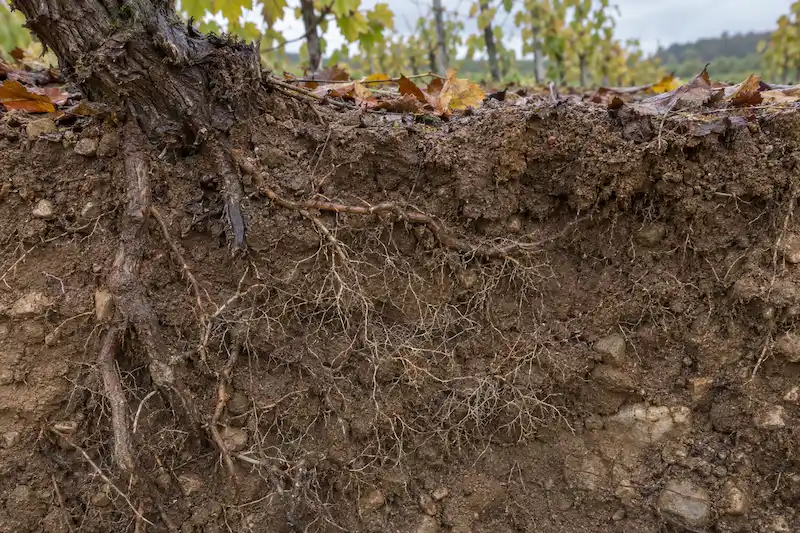
The soil lever: restart biological activity when the rain returns
This is where most post-harvest programmes stop too early. Growers almost always frame the period around leaves and mineral nutrition. Yet the soil is the second determining factor. In 2026, it suffered most.
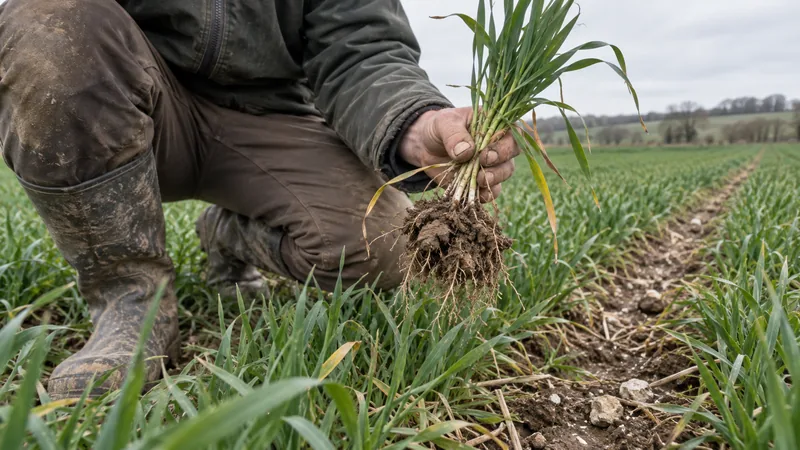
New fine roots appear after harvest
One piece of physiology explains why. The IFV notes that new fine roots develop after harvest, provided the leaves stay functional. The vine uses them to consolidate its reserves. The institute adds that this requires water.
These rootlets measure less than a millimetre across. They occupy the top 10 to 60 centimetres of the profile. They do the real work of absorbing water and minerals, and they renew themselves constantly.
The two levers therefore depend on each other. An active canopy fuels fine-root production. Those fine roots then govern how well the vine can refuel. Playing one without the other leads to budbreak 2027 with reserves but no uptake system — or the reverse.
What a soil biostimulant works on
Autumn rain opens a second window. A soil biostimulant operates on that ground. Humic and fulvic acids improve nutrient availability. Beneficial microorganisms (PGPM) contribute to fertility and to symbiotic associations. These are the same mechanisms growers use to rebuild soil life in arable rotations, transposed to a perennial crop.
Soil temperature also drives root growth strongly. The IFV notes that soil at 30 °C halves fine-root growth compared with soil at 22 °C. Autumn brings temperatures back into a favourable range. The root system becomes active again — provided the water has returned.
How to prioritise block by block
Not every block deserves the same effort. Here is how to rank them.
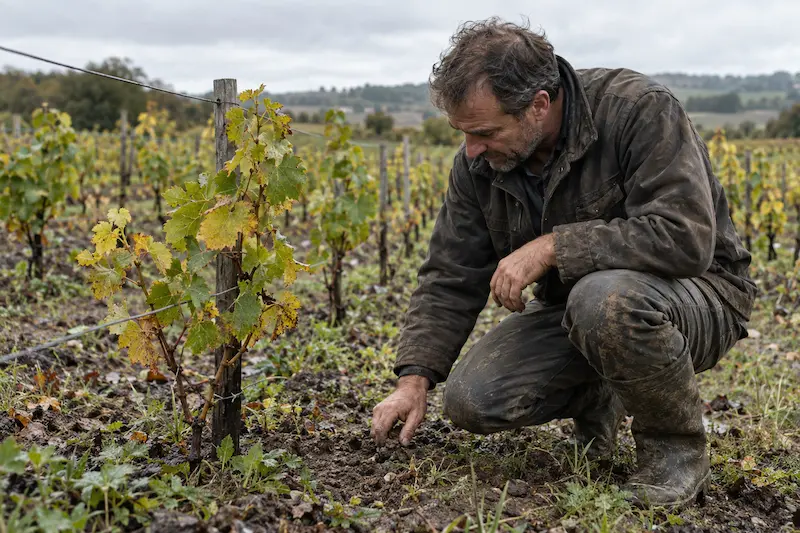
Young plantings first. Sencrop flagged it back in July: young vines suffered most from the heat. Their root system is still colonising the soil — it takes seven to eight years to establish properly. Their reserves are low by design. They will pay the highest price for a neglected autumn.
High-cropping blocks next. The leaf-to-fruit ratio strongly determines starch content in permanent structures and roots. A block that carried a heavy crop on limited leaf area comes out mechanically poorer.
Then the most stressed blocks. Keep the earlier caveat in mind: where defoliation ran deep, the decision swings towards the soil.
Cover-cropped blocks last. The cover competes with the vine for water and nitrogen in autumn. Managing it belongs in the post-harvest plan. It costs nothing.
In practice, the right question is not “which product”. It is: which block needs it most, and through which lever? A viticultural adviser remains best placed to fine-tune timing against what you see in the field.
Frequently asked questions
When should you apply a post-harvest biostimulant to grapevines?
The window runs from harvest to leaf fall. It closes faster as defoliation progresses. In 2026, the early harvest widened it across most vineyards.
Does a biostimulant replace autumn fertilisation?
No. A biostimulant acts on the plant’s physiological processes and on soil life, regardless of its nutrient content. It complements a fertilisation plan rather than replacing it. European fertilising-products regulation draws that same distinction.
What is the point if the vine is about to go dormant?
Precisely to prepare the exit from dormancy. The vine mobilises its autumn reserves from budbreak to flowering. Whatever it failed to store will be missing in spring.
Can you still act on a vine that lost its leaves in August?
The foliar lever has nothing left to work with. The soil lever remains available and matters even more. Restarting biological activity supports the flush of new fine roots.
Are these solutions compatible with organic management?
Some biostimulants on the market are approved for use in organic farming. Check that regulatory status product by product on the label.
Key takeaways
Autumn is the only period when growers can work the plant and the soil at once. The effect, however, only shows the following spring. That is what makes this window the best moment to position a biostimulant on grapevines. In 2026, the early season widens it further.
Three points shape the decision:
- Canopy condition at harvest determines whether the foliar lever is still usable.
- The return of rain governs soil biological recovery and fine-root production.
- Young plantings and high-cropping blocks deliver the best agronomic return on the effort.
Vineyard results vary with soil and climate conditions, variety, rootstock and water status. That holds true for any agronomic lever of this kind. All the more reason to target the situations where the need is clear, rather than treating uniformly.
👉 Discover our foliar biostimulants to support reserve build-up while the canopy is still active.
👉 Learn more about our soil solutions to restart biological activity when the rain returns.
Sources
- IFV Occitanie — Carbohydrates (C) and nitrogen (N) in grapevine: basic information
- IFV Occitanie / INRAE / Institut Agro-Montpellier — Grapevine roots
- Sencrop — 2026 harvest: a very early vintage already under pressure
- La France Agricole — The 2026 drought, a major warning for French soils
- Vitisphere — Post-harvest foliar fertilisers support reserve build-up
- Veragrow internal data — over 930 field trials since 2021