
A seed treatment biostimulant is a solution applied directly to the seed, before sowing, to improve germination, speed up root development and give the seedling more vigour during its first few weeks. In practical terms, it acts on three levers: the speed and uniformity of emergence, the density of the root system, and the young plant’s tolerance to the abiotic stresses of sowing — cold soil, limited water reserve, uneven seedbed.
An essential point, often confused: a seed biostimulant does not protect against diseases or pests. It does not replace a protection treatment; it acts on the plant’s physiology, not on pests and pathogens. The two approaches are complementary and are decided separately.
That leaves the real question, the one every cereal grower asks in September when ordering their seed: in which situations is this lever worth the investment, and what can reasonably be expected from it? That is the subject of this guide.
Why the first few weeks after sowing decide the season
Between sowing and tillering, a straw cereal goes through the most vulnerable phase of its cycle. The seed mobilises its reserves, puts out its first roots, then has to become self-sufficient before those reserves run out. Anything that slows this transition — a seedbed that is too cloddy, a soil that cools quickly, an already-depleted water reserve — is paid for later.
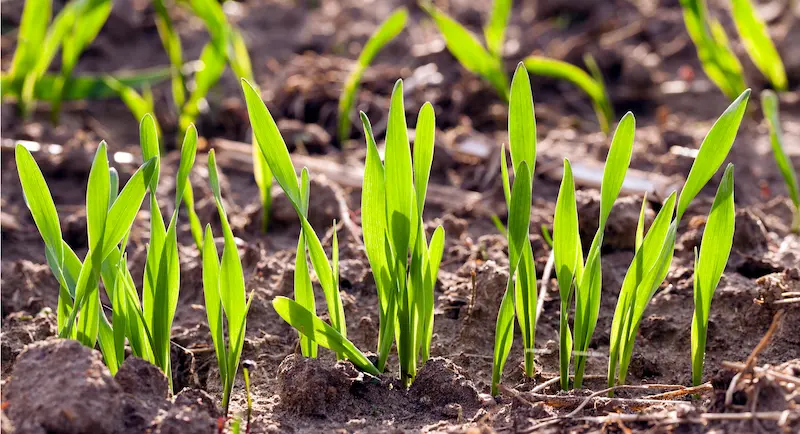
This window is all the more critical for being short. According to ARVALIS, the optimal sowing period for straw cereals broadly runs from 20 October to 10 November, with a marked interest in early-November sowings to limit autumn weed growth, aphid pressure and take-all disease. Delaying sowing therefore offers real sanitary benefits — but exposes the crop to more difficult emergence conditions.
This is the whole paradox of autumn. Sowing late protects the crop from certain problems, but starts it off in shorter days, colder soils and slower mineralisation. The trade-off comes down precisely to the seedling’s ability to establish quickly despite less favourable conditions.
The context of the 2027 season reinforces this challenge. After an early 2026 harvest marked by drought and heatwaves, the chambers of agriculture report lower yields on straw cereals and protein crops. Soils are entering autumn with depleted reserves and uneven structural states. In other words, successful establishment can no longer be taken for granted.
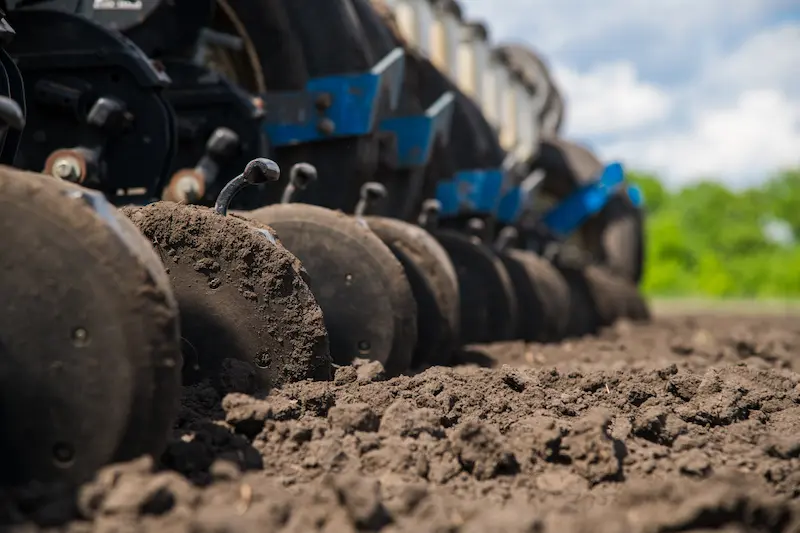
Finally, establishment is not decided on the seed alone. It begins well upstream, with residue management and soil preparation during the intercrop period, which condition the quality of the soil-seed contact. Seed treatment comes next, as the last lever available before the seed leaves the bag.
What a biostimulant applied to the seed actually does
To understand the value of a seed treatment biostimulant, we need to come back to what a biostimulant is: a product that does not supply nutrients in significant quantities, but stimulates natural physiological processes in the plant and its immediate root environment. Applied to the seed, it places this stimulation exactly where the need is greatest: around the seed, at the moment of germination.
Several families of active ingredients are involved, each acting on a distinct mechanism.
Humic and fulvic acids improve the bioavailability of the nutrients present in the zone surrounding the seed. In particular, they facilitate access to the less mobile elements, which often remain locked in the top few centimetres while the seedling cannot yet reach far for them. They also contribute to the structuring of aggregates in immediate contact with the roots.
Phytohormones — auxins, cytokinins, gibberellins — drive root initiation and elongation. This is the most visible mechanism in the field: stimulated rhizogenesis translates into a denser, more branched root network, which mechanically improves the seedling’s anchorage and its ability to take up water and nutrients.
Beneficial microorganisms, of the PGPR and PGPF types, colonise the rhizosphere from the very first days. They take part in the biological activity around the root and promote the solubilisation of nutrients. Moreover, a biologically active rhizosphere is a better-occupied rhizosphere, which limits the establishment of less desirable organisms.
Polysaccharides, amino acids and phenolic compounds act on the stress response. They support the young plant’s metabolism when conditions deteriorate and contribute to the antioxidant protection of the tissues being formed. It is this family that makes the difference during dry autumns or mild spells followed by cold snaps.
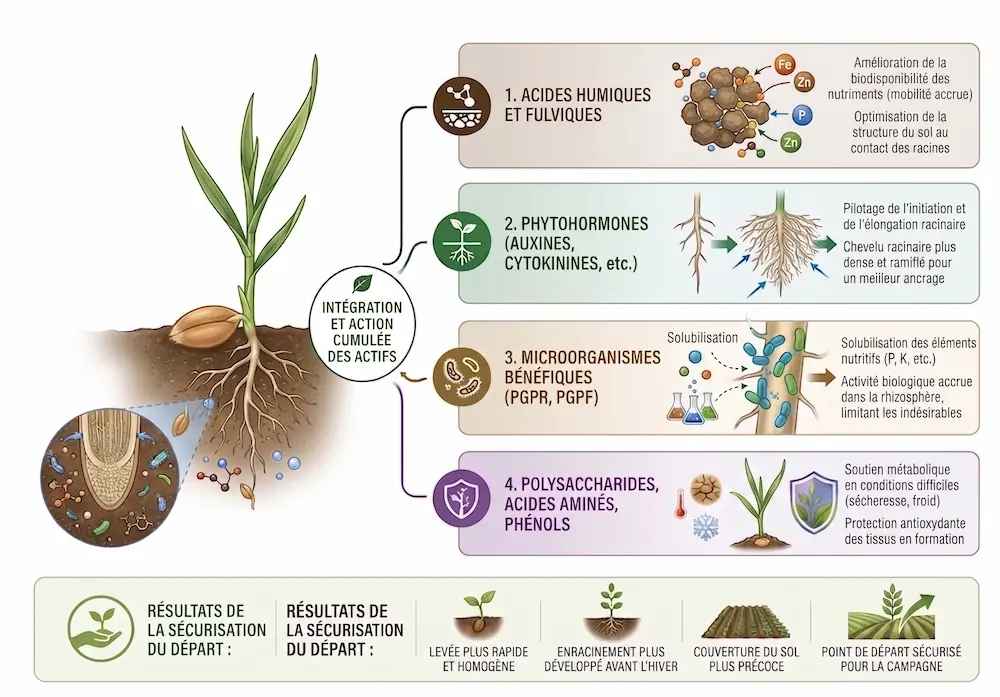
These mechanisms add up, but they do not create yield on their own. What they secure is a starting point: faster and more uniform emergence, a more developed root system going into winter, a crop that covers the soil earlier. The rest of the season will do the sorting.
Biostimulant or seed protection: two different logics
This is the point that most available content leaves vague, and it deserves to be stated clearly.
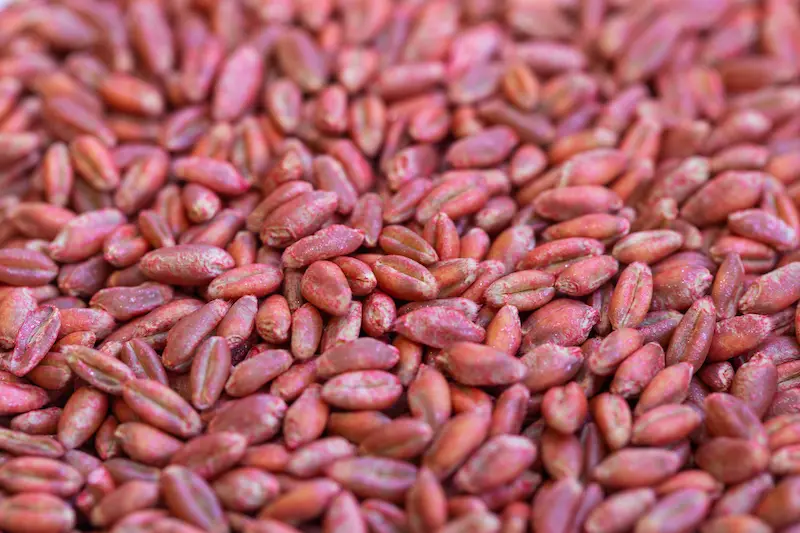
A seed protection treatment targets identified pests and pathogens. On straw cereals, ARVALIS points out that protection remains fully relevant against common bunt of wheat or loose smut of barley, with a rationale based on plot risk and seed origin. That decision is a sanitary one, and nothing replaces it.
A biostimulant, conversely, acts on the plant itself. It targets no pest or pathogen and claims no efficacy against them. Its effect is indirect: a seedling that starts quickly spends less time in its most vulnerable stages and is better armed against weed competition.
So the right way to frame the question is not “biostimulant or protection”, but “which protection given the risk, and should the start also be secured”. The two are decided one after the other, not one against the other. In practice, the technical compatibility between the two applications remains a selection criterion in its own right.
Finally, one useful regulatory point. Seed treatment biostimulants most often fall under the framework of fertilising materials and growing media, as Réussir Grandes Cultures already noted in its market overview. Many of these solutions are also approved for use in organic farming (UAB), which broadens their appeal to systems without synthetic inputs.
The sowing situations where the lever weighs most
Here is the heart of the decision. A seed treatment biostimulant does not have the same value in every situation, and it is more honest — as well as more useful — to say so.
Late or delayed sowings are the first case. The further into autumn, the more soil temperatures drop and the more emergence drags out. A lever that speeds up germination and rooting then works in the direction of the main constraint. This is probably the situation where the gap with an untreated control is most readable going into winter.
Soils with a low available water capacity come next. Shallow soils, clay-limestone soils, stony land: there the seedling depends closely on the speed at which it explores the profile. The reasoning is the same as the one already developed for sowing in dry conditions — anything that speeds up root descent widens the margin for manoeuvre.
Direct-drilling and reduced-tillage systems form a third case. Surface residues, uncultivated soil and slower mineralisation create a less regular germination environment. Stimulating biological activity and rooting in immediate contact with the seed then makes full sense.
Reduced seed rates also deserve attention. Lowering the density is an attractive economic lever, but it only works if every emerged seed compensates. Securing the emergence rate and its uniformity then becomes a condition of success, not an extra.
Plots with early weed pressure finally, where gaining a few days of soil cover changes the balance of power with weeds from the autumn onwards.
Conversely, in a deep, well-structured plot, sown in the middle of the optimal window and in good moisture conditions, the expected effect will necessarily be more discreet. The plant meets few limiting factors at the start there, and a start-up lever mechanically has less to work with.
One reality must also be accepted: the response observed in the field varies according to the soil, the year’s climate and the crop management. That is inherent to solutions that act on the plant’s physiology rather than on a single factor. In practice, this argues for targeting plots with an identified constraint, with an untreated control strip to objectively assess the result in your own context. This control strip costs little and remains the best way to decide.
Fitting seed treatment into the autumn programme
A biostimulant applied to the seed is not an isolated act. It opens a sequence, and it is by thinking about that sequence as a whole that you get the most out of it.
The season logic is simple. Seed treatment secures establishment; a soil intervention maintains biological activity and nutrient bioavailability; a foliar application then supports the phases of high demand, notably at stem elongation on wheat, when the crop builds its yield components. Each intervention answers a distinct need, depending on the target stage.
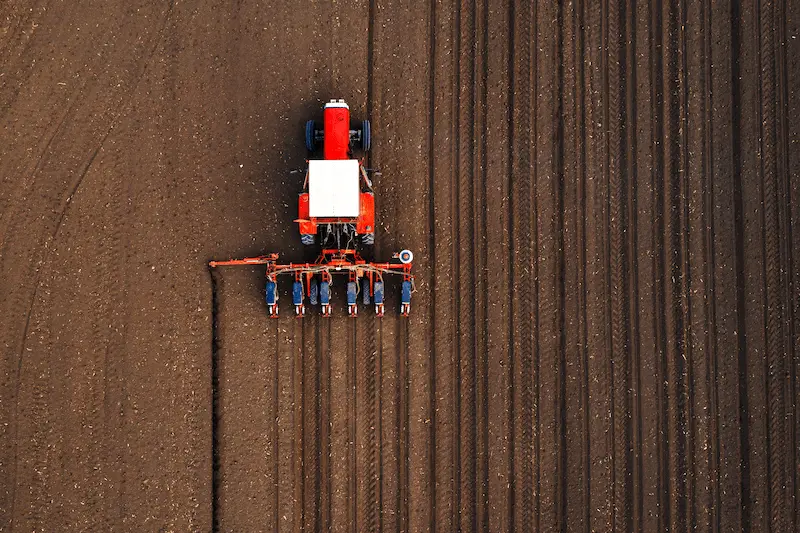
Next comes the question of the application method. The treatment can be carried out at a certified seed station, where the application is calibrated and uniform, or on the farm, with a contract seed cleaner or dedicated equipment. The second route offers more flexibility and a controlled cost, provided you have equipment allowing an even distribution over the batch — a heterogeneous application produces a heterogeneous emergence, which cancels out the intended benefit.
Several criteria allow two solutions to be compared objectively. Compatibility with the chosen protection treatment, first, which is checked before purchase and not on the day of application. The shelf life of the treated seed next: some treated seeds keep for up to two years, others far less, which matters if sowing is postponed by the weather. The regulatory status and organic-farming (UAB) eligibility, finally, depending on how the farm is run.
One last point is worth anticipating. A treated seed is a committed seed: if conditions force you to give up sowing a plot, the batch must be able to be postponed or reassigned. Checking this parameter before treating all your batches avoids an unnecessary constraint during a difficult autumn such as this one may be.
Frequently asked questions
Does a seed biostimulant replace a protection treatment?
No. A biostimulant acts on the plant’s physiology — germination, rooting, stress tolerance — and targets no pest or pathogen. The decision to protect against common bunt of wheat or loose smut of barley is reasoned independently, based on plot risk and the origin of the seed batch.
When should a biostimulant seed treatment be decided?
In September, when ordering the batches. The treatment is applied before sowing, and the optimal sowing period for straw cereals opens around 20 October. Waiting for the sowing window to open before deciding leaves too little margin, especially if the treatment is carried out at a station.
Can seed be treated on the farm?
Yes, with a contract seed cleaner or dedicated equipment allowing an even distribution of the product over the whole batch. The uniformity of the application directly conditions the uniformity of emergence: an irregular distribution cancels out the intended benefit.
Key takeaways
The seed treatment biostimulant acts on the physiology of the start: germination, rooting, seedling vigour and tolerance to the stresses of the first few weeks. It does not replace any sanitary protection and does not make up for a failed soil preparation, but it secures the link on which a significant part of the season is decided.
Its value is all the clearer when emergence conditions are constrained: late sowing, shallow soil, limited water reserve, direct drilling, reduced density. In these situations, the investment is reasoned like an insurance on establishment. Elsewhere, the trade-off is worth making plot by plot, backed by a control strip.
For the season now opening, the decision is made now: seed batches are ordered in September, well before the sowing window actually opens.
Sources
- ARVALIS — Cereals: preparing this autumn’s sowings well
- ARVALIS — Seed treatments: protection still relevant on straw cereals
- Réussir Grandes Cultures — The biostimulant offer for seed treatments takes off
- Chambres d’agriculture France — Field crops 2026: where do the harvests stand?
- La France Agricole — 2026 harvest: yields down for cereals, a more favourable outcome for rapeseed